

Robotics Club Expands to Cathedral
SPRING 2026 CCS NEWSLETTER
STEM—science, technology, engineering, and math—has become an increasingly important focus in education, helping prepare students for a rapidly changing world. At Catholic Community Schools, that preparation is taking shape in meaningful, hands-on ways.
At All Saints Academy, STEM education has been growing for several years under the leadership of Karl Terhaar. While serving as principal, Karl recognized that adding engineering and robotics into an already full school day would be a challenge. Instead, he chose to build something new—launching an after-school robotics club where students could develop problem-solving, critical-thinking, and collaboration skills through hands-on experience.
When the opportunity arose to step into STEM teaching full-time, Karl embraced it, continuing to grow the program and expand opportunities for students. This year marks a new chapter for STEM education at CCS, with the robotics club being offered at Cathedral for the first time.
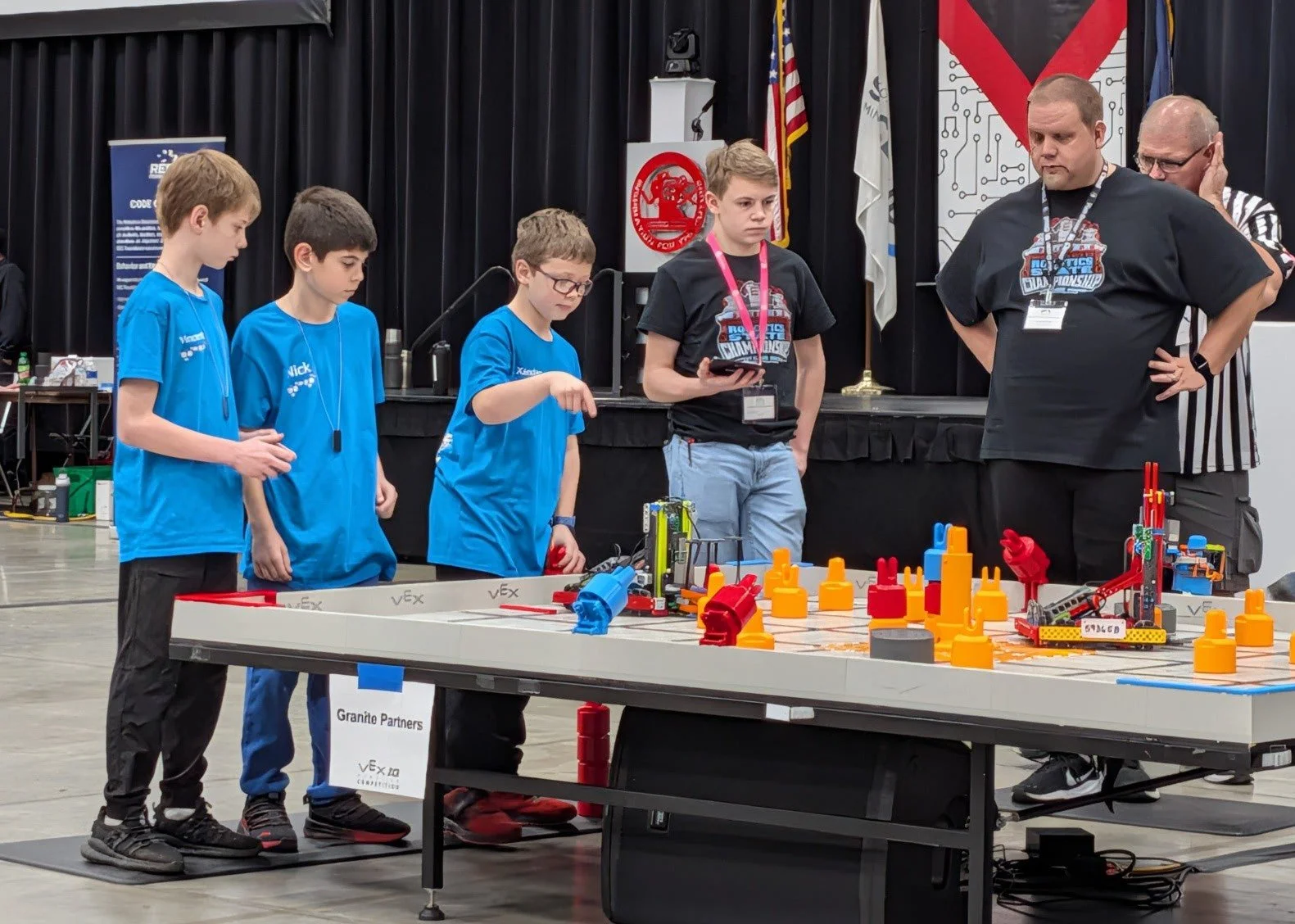
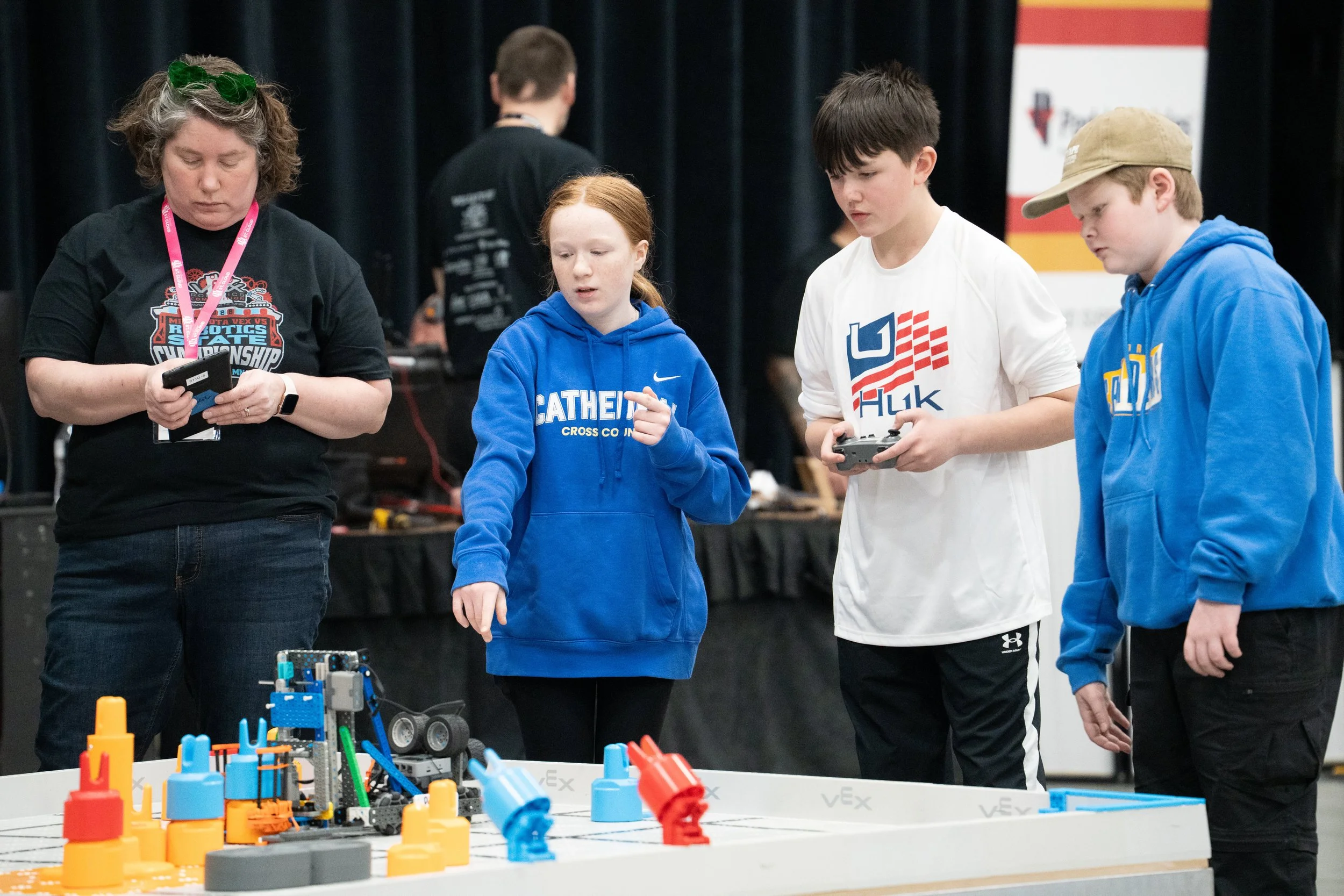
In its inaugural season, the Cathedral program is already seeing remarkable success. Two teams qualified for the State competition, and one has advanced to the international level this April—an impressive achievement that reflects both the strength of the program and the dedication of its students.
Building Robots, Building Skills
To help the CCS community understand what robotics club is all about, we asked Karl to explain how the program works and what students experience.
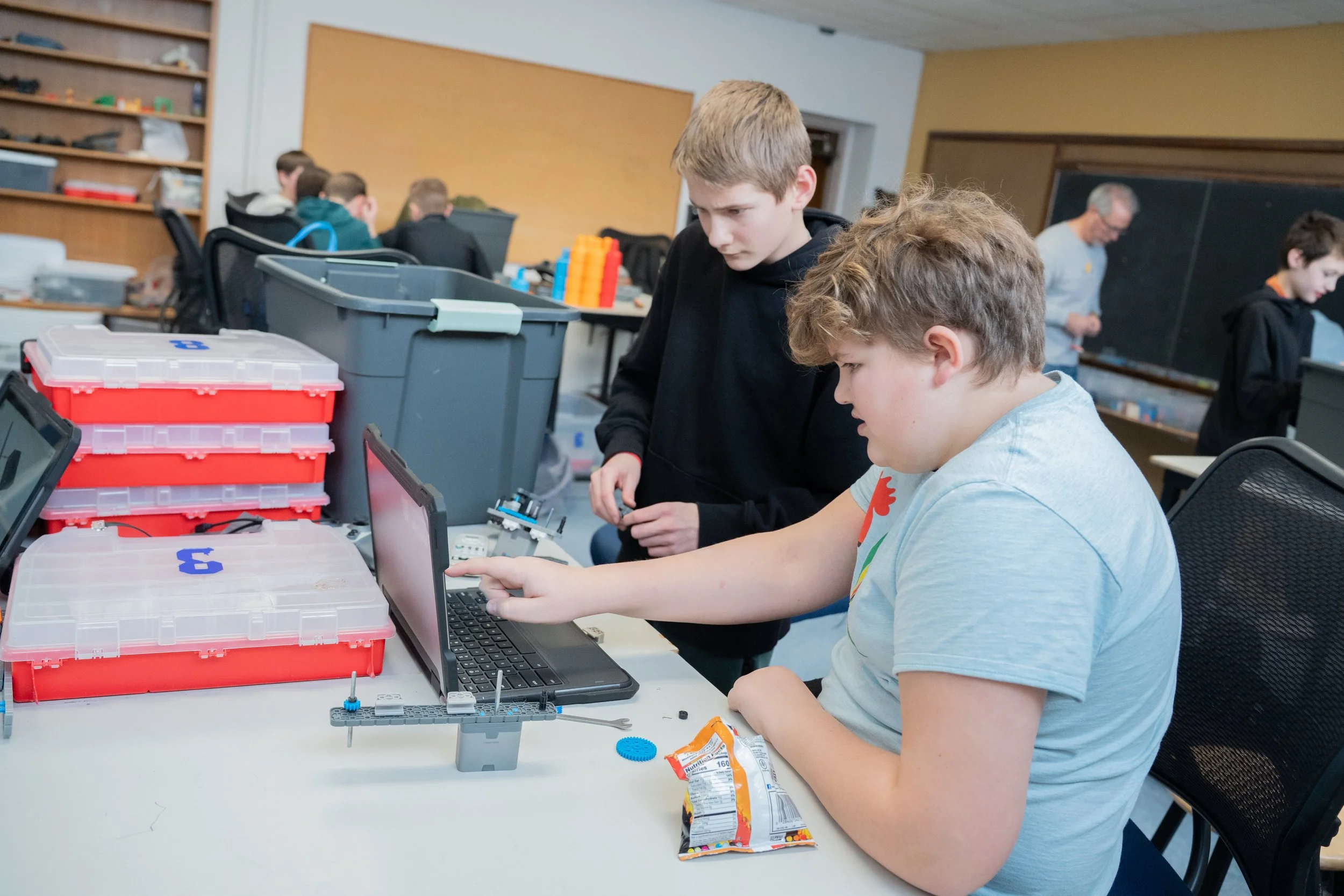
This year, the club included 13 students at Cathedral and 19 at All Saints Academy. Each year, VEX Robotics releases a new challenge, requiring teams to design, build, and program a robot to complete specific tasks and score points. While students can start with basic builds, the most successful robots are refined and redesigned through testing and iteration. This year, one Cathedral team developed a custom robot that outperformed the standard model—a testament to the creativity and problem-solving the program fosters.
Competitions are fast-paced and collaborative. Teams compete on a standardized field in timed matches, sometimes working independently and sometimes in alliance with others. Students take full ownership of the process, from designing and building to programming and driving their robots.
“Students are challenged to design, test, revise, and improve real solutions while working in teams,” Karl explains. “These experiences mirror today’s workforce, where collaboration, adaptability, and problem-solving are essential.” He adds, “It’s one thing to build something in Minecraft—it’s another to construct a working structure using physical materials. Students must apply concepts like force, structure, and simple machines to bring their ideas to life.”
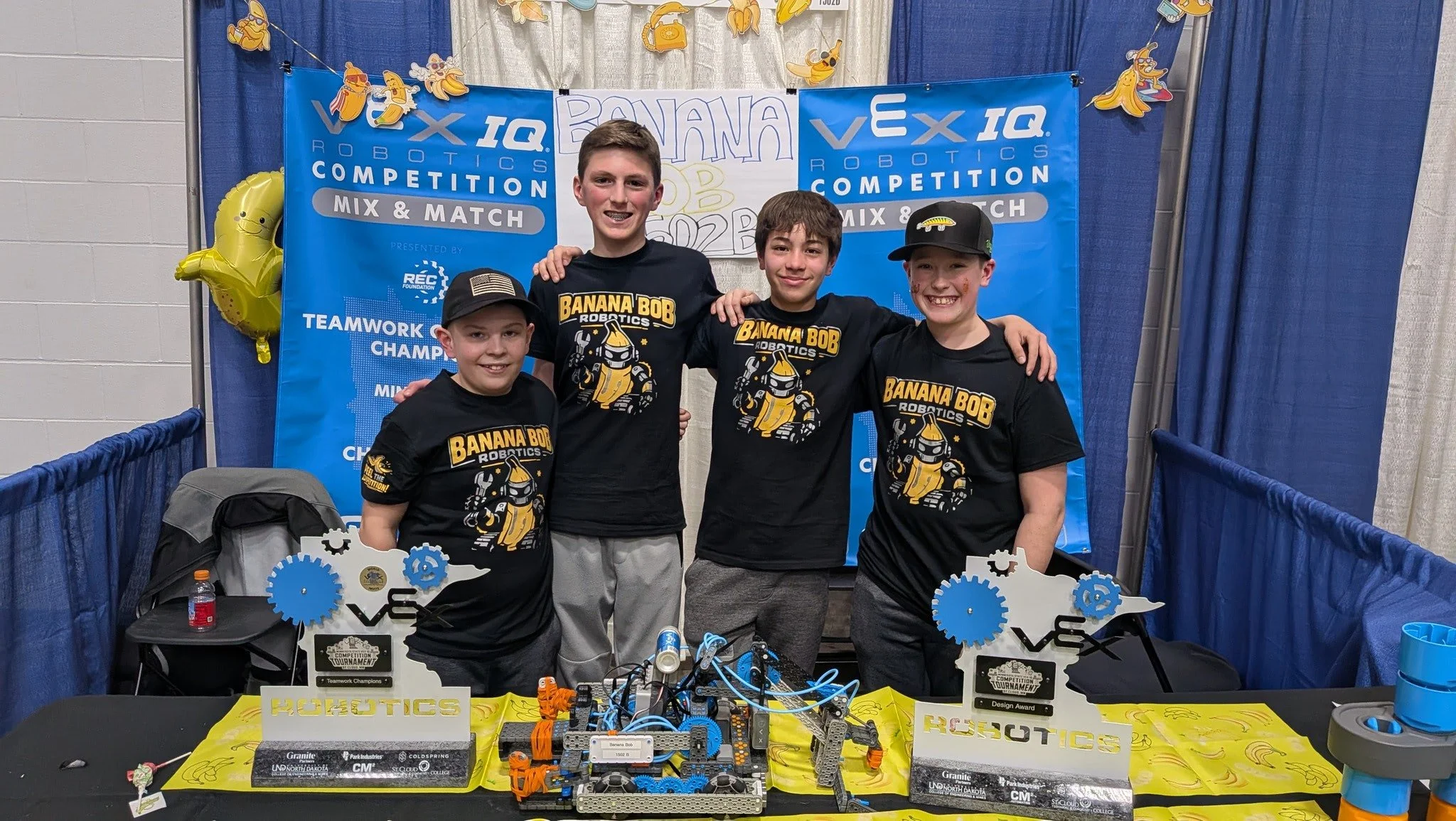
The robotics season runs from October through February, with teams meeting twice a week and competing in several tournaments. Students can qualify for state-level competition through strong performance or by earning awards like the Design Award, which recognizes excellence in engineering documentation and design thinking.
As Cathedral students prepare to compete on a global stage at the The 2026 VEX Robotics World Championship, they are building more than robots—they are developing confidence, creativity, and ingenuity, skills that will serve them long after the season ends.
